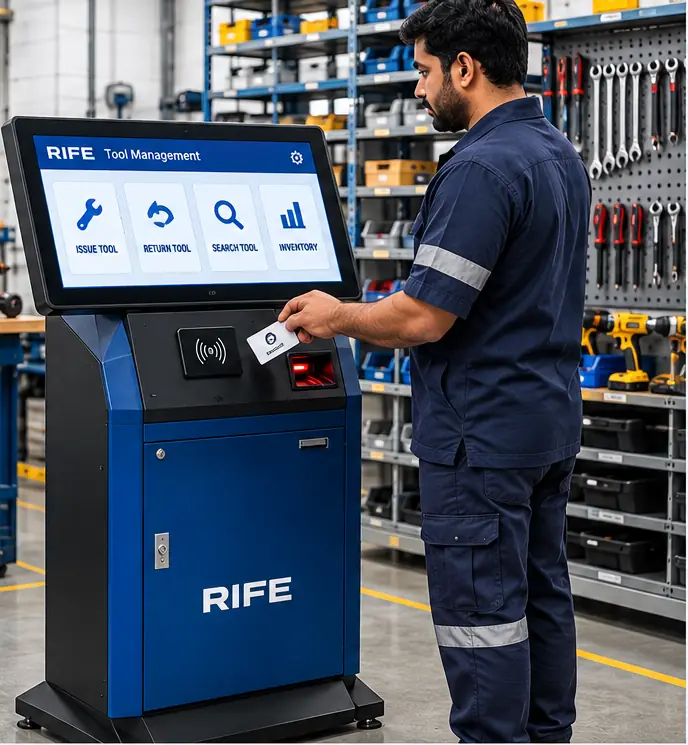
A traditional tool crib depends on an attendant, a counter and a logbook. When the attendant is busy or off shift, tools go missing, inserts are over-used, and records fall behind. A smart tool crib keeps the control and removes the bottleneck.
Two kinds of tool crib stock
- Consumable tooling: inserts, drill bits, taps, abrasives. Used up, then reordered.
- Returnable tools: gauges, torque wrenches, power tools. Issued, then returned.
A smart tool crib handles both.
How it works
- Sign in. The user identifies themselves with an RFID card or PIN.
- Take what you need. Weighing drawers and cabinets record how many consumable items were taken.
- Issue and return tools. Returnable tools are issued against the user and checked back in.
- Reorder automatically. Low stock triggers a replenishment alert.
What changes
- The crib can be used around the clock without an attendant.
- Every withdrawal is recorded against a user.
- Overdue returns are visible.
- Usage by machine, job or shift supports tooling budgets.
Is it a tool vending machine?
Tool vending machines and smart tool cribs solve the same problem. Vending machines release one item at a time; a smart tool crib typically combines weighing drawers, smart cabinets and a self-service kiosk, which suits a wider mix of tools and consumables.
See Smart Tool Crib and Weighing Drawers.