Automotive Inventory Management with Smart Bins & Racks
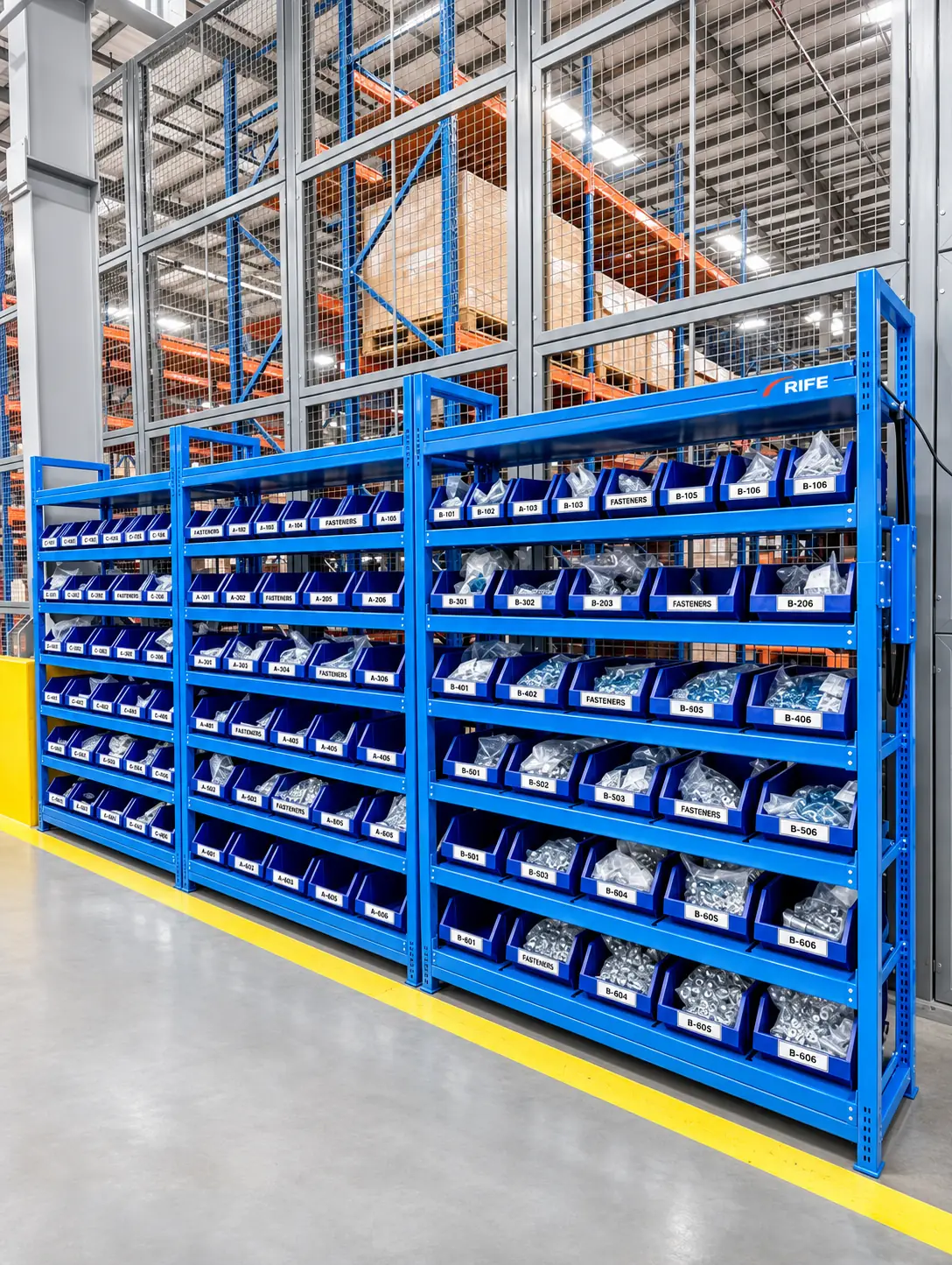
Automotive production consumes fasteners, fittings and maintenance supplies in repeated cycles. Smart shelves and Kanban bins make the availability of those parts visible across high-volume assembly stations and tool stores.
Just-in-time replenishment needs reliable signals. Waiting until the last bolt is gone defeats the point of lean stock.
High-volume assembly magnifies small shortages
A single assembly operation can draw hundreds of similar fasteners during one shift. When a bin runs empty, the next station waits or the line uses valuable time to locate a replenishment tray. Automotive stores therefore need stock signals connected to the real rate of usage rather than an arbitrary end-of-day count.
A weighing bin dedicated to one consistent item calculates the count from calibrated unit weight. The threshold can be selected to leave enough time for material handling and refilling.
Make Kanban signals visible across cells
Many plants already use physical Kanban cards and standard bin sizes. Monitoring does not require discarding that operational knowledge. The same location, part number and refill quantity can be represented digitally while weight readings provide another replenishment trigger.
Where a line receives items from a supermarket rack, smart weighing shelves can monitor the upstream stock. This connects a line-side shortage to the rack position from which the handler will refill, reducing unnecessary searching and repeated handling.
Control tooling and maintenance consumption
Beyond fasteners, automotive plants consume cutting inserts, drills, torque-tool accessories and maintenance supplies. An access-controlled cabinet or smart drawer can add a user record to a quantity change, helping supervisors review consumption patterns across shifts.
Returnable tools can be handled by an issue-and-return workflow with identification records. Keep consumable-by-weight counting separate from returnable-item tracking so reports reflect what actually happened.
Select the right roll-out sequence
Choose a group of fasteners with consistent unit weights and reliable containers. Test sensor sensitivity at full and near-empty bin levels, define the needed refill lead time, and check how vibration affects measurement. A focused pilot is easier to review with production and stores teams.
Once the pilot shows useful counts and timely alerts, expand by cell, rack bay or part family. Review access rules, data exchange and replenishment ownership before extending across multiple lines.
Standardize across repeat assembly cells
A successful automotive rollout should define the item and rack identifiers used across cells so the store can handle common parts consistently. Select a group of high-turnover fasteners and record representative full-bin and low-bin readings, operator withdrawals, reserve stock and material-handler routes. Verify the effect of vibration, container replacement and any alternate packaging used by suppliers. Compare the alerts with the plant's JIT delivery cycle, and document how the team handles a sensor fault without stopping production. Expand into other assembly areas only when the monitoring and refill sequence works across normal shifts.
Start with the right storage technology.
Choose the format for the stock and users first. Sensing, access controls and inventory reporting can be configured around the approved material and workflow.
Frequently asked questions
Can smart shelves support just-in-time assembly?
They can supply more timely count and refill signals for suitable parts. The final threshold must reflect lead time, actual demand and production policy.
Do existing Kanban bins have to be discarded?
No. Existing containers and racks can be reviewed for sensor retrofits if the mounting, tare and loading arrangements are suitable.
Give high-volume assembly a more reliable refill signal.
Share your item list, locations, access requirements and replenishment challenges. We can review a suitable smart inventory configuration.
Request a Configuration ↗