STRUCTURE
Reinforced racks and platforms
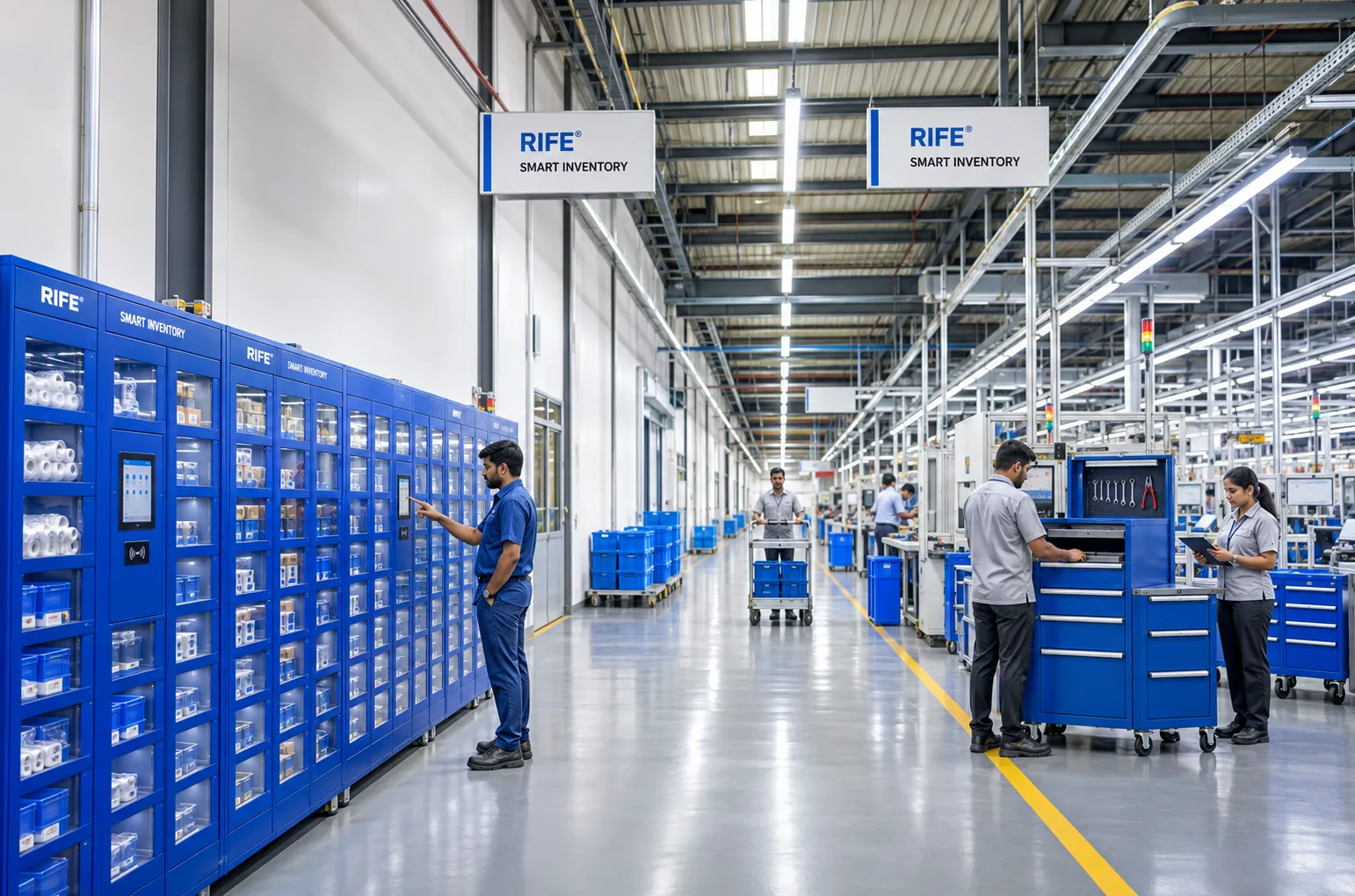
Choose a stable structure sized for the item dimensions, load distribution and handling process.
Some materials are too large or heavy for a conventional smart shelf. ERGO engineering brings weight-based inventory monitoring to platforms and reinforced racking for heavy components, with load-cell selection, structural support and tracking tailored to each item type.
Illustrative
Large castings, motors, coils and containers deserve the same stock visibility as small fasteners. Weight-based monitoring can be adapted to the structure and material being stored.
Build around the mechanical load first, then select the measurement and software workflow.
Choose a stable structure sized for the item dimensions, load distribution and handling process.
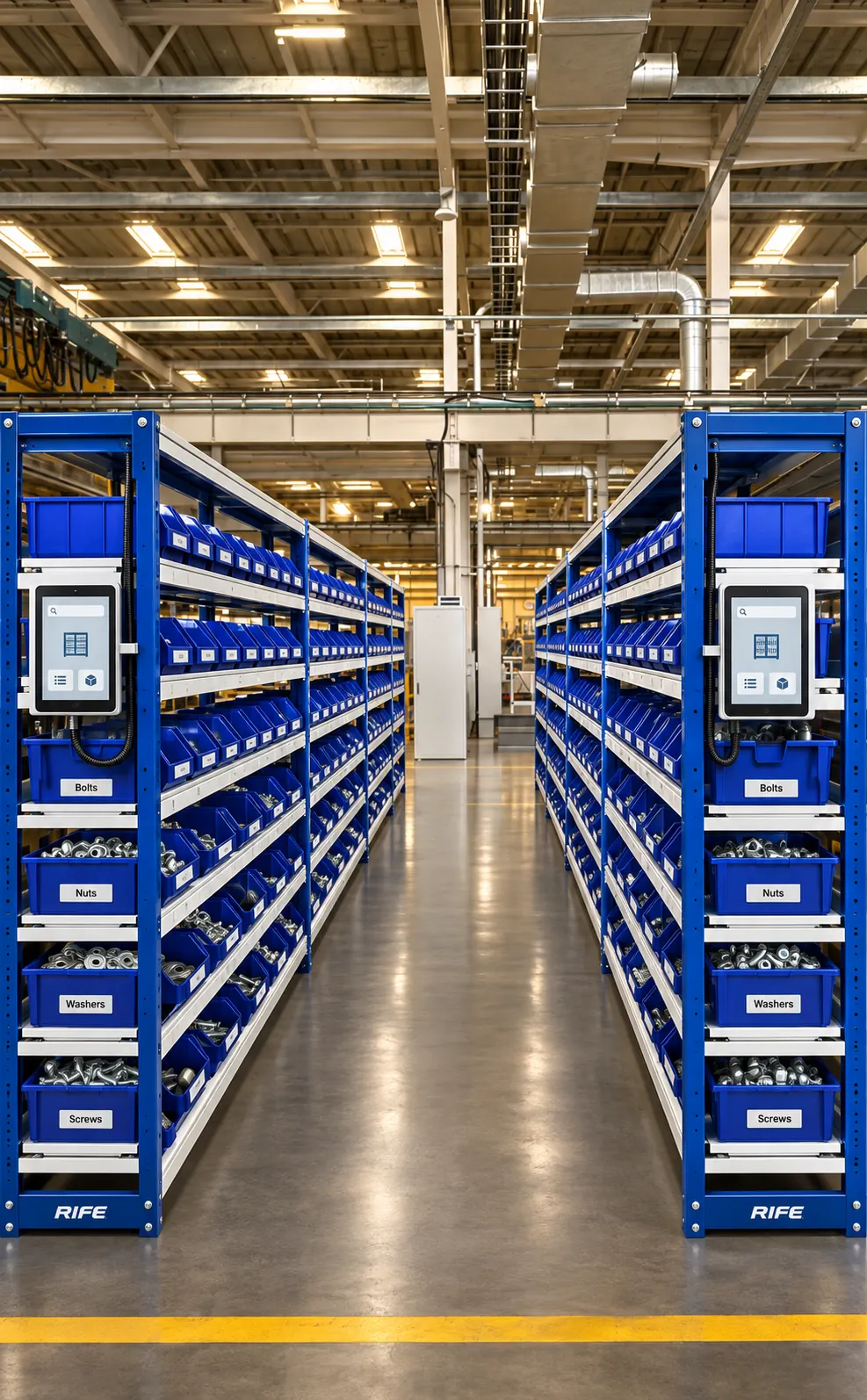
Sensor selection follows maximum loaded weight and the minimum stock change that operations must detect.
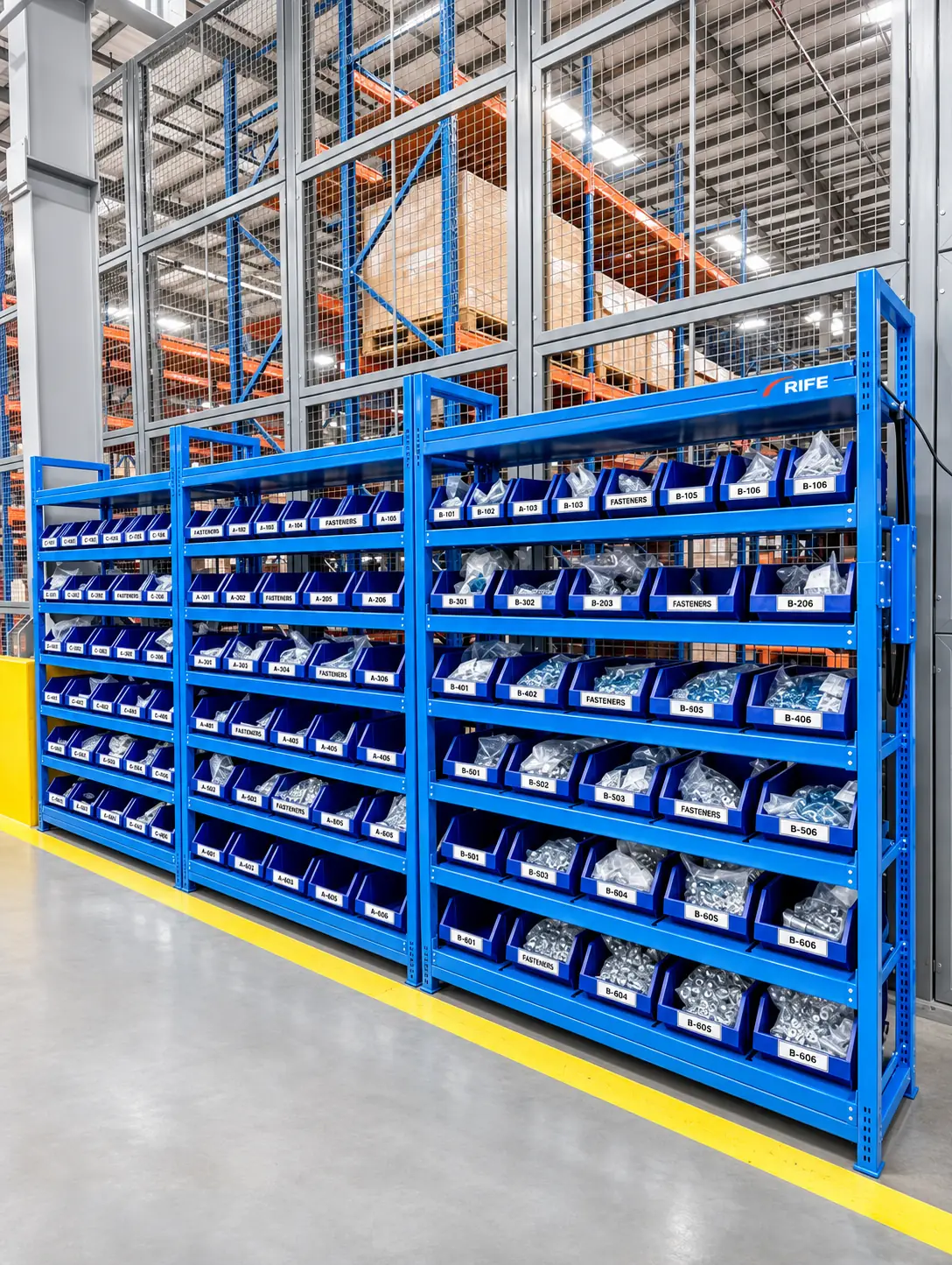
Connect calibrated positions to recorded quantities, threshold alerts and stock reports.
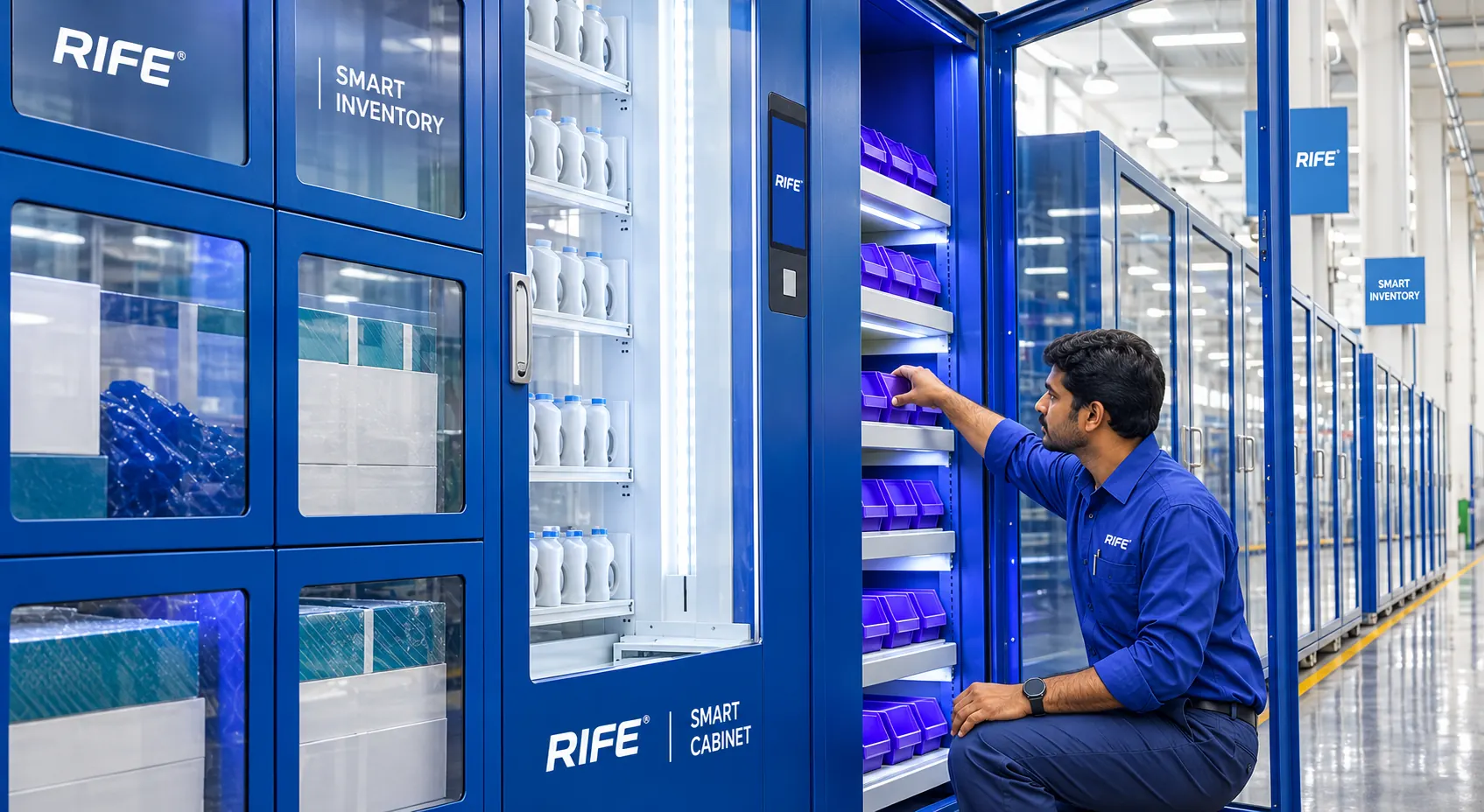
RIFE can develop suitable enclosures, mounting assemblies and interfaces for the application.
A heavy stock position must be mechanically stable before useful weighing measurements are possible. Engineering considers platform dimensions, load distribution, handling impact, mounting and overload protection. The finished design can be a dedicated weighing platform or a supported rack zone, selected for the intended materials.
A factory may store thousands of small fasteners alongside several large motors or drums. ERGO monitoring can bring suitable weighing positions into a common stock and replenishment view, so teams can plan around both kinds of materials without separate manual spreadsheets.
Define dimensions, packaging, full-load weight and ordinary pick/replenishment movement.
Choose rack or platform geometry and the mechanical support layout.
Match load cell range, wiring and calibration to representative stock.
Test measurement under normal handling conditions and configure inventory rules.
Keep large industrial parts visible in dedicated rack or floor positions.
Monitor stocked assemblies at maintenance or manufacturing stores.
Use configured supports to monitor material consumed from a stock position.
Track suitable liquid or solid consumables where weight gives a useful stock signal.
Supply the actual item sizes and stock weights so engineering can select and validate the configuration.
Request a Configuration →| Option | Configuration |
|---|---|
| Load capacity | Calculated from actual stored weight and handling conditions |
| Measuring structure | Platform, reinforced shelf or dedicated rack zone |
| Sensor arrangement | Number and rating of load cells per position |
| Resolution | Chosen for the smallest relevant material change |
| Overload and safety | Mounting, mechanical stops and handling clearances |
| Inventory software | Item, location, reorder and reporting workflow |
| Installation | Electrical, network and commissioning plan |
A weighing platform or reinforced storage position that is designed for heavier materials and connects calibrated stock readings to inventory tracking.
Yes, where item weights and the storage layout make weight measurement suitable. The exact mechanical support and sensor range depend on the materials and handling method.
Suitable weighing positions can report through a shared inventory application with common location, SKU and replenishment fields.
We review total load, loading direction, item variation, environmental conditions and smallest change that must be detected before specifying sensors and structural support.
The useful minimum change is measured on the complete assembly with the intended loads, not assumed from an individual load-cell specification.
Share your stored materials, capacities, storage dimensions and operational needs for a project-specific discussion.