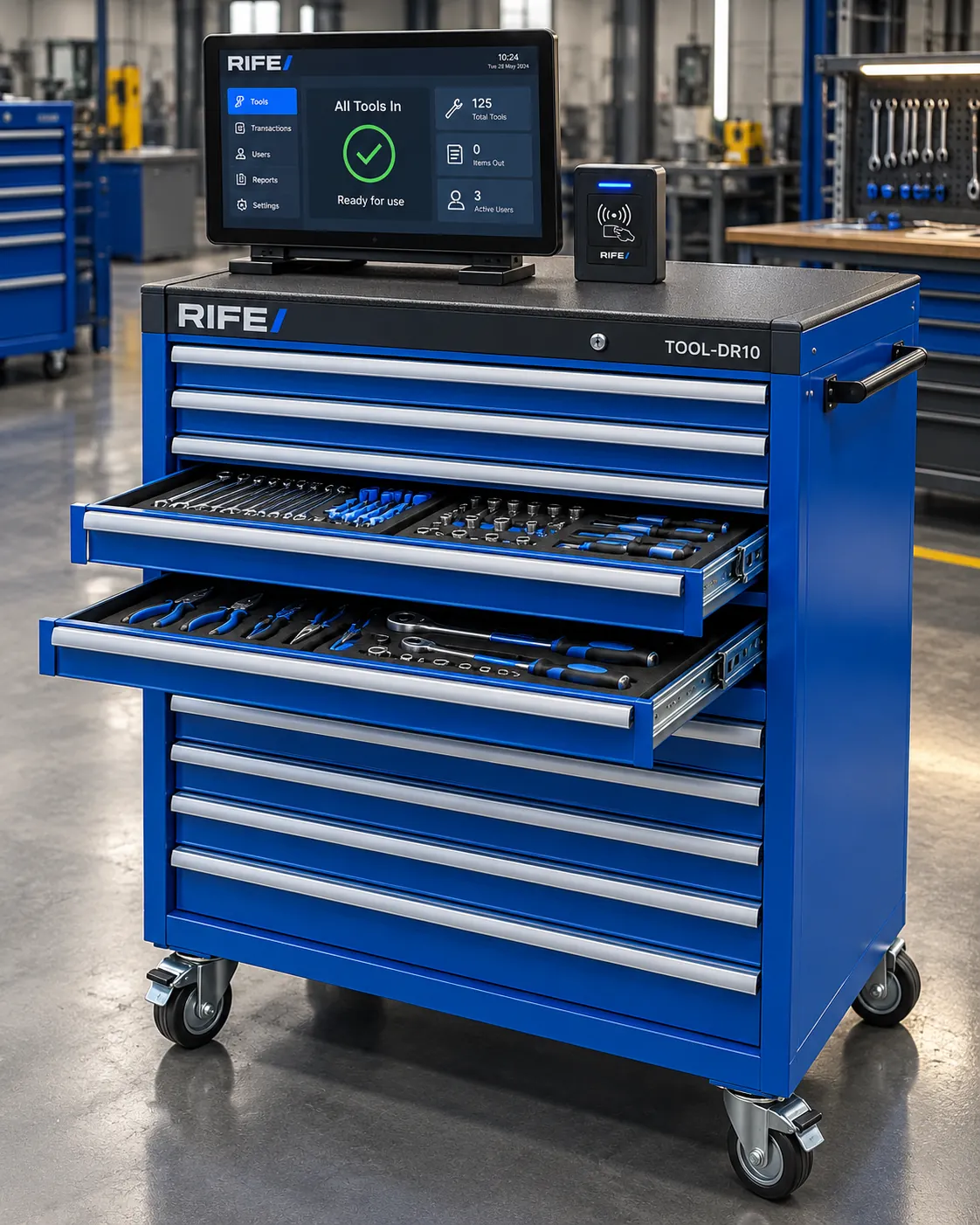
WEIGH
Weighing drawers
Dedicated measuring positions calculate the quantity of known consumables such as cutting inserts and drill bits.
Explore solution →Replace the tool-crib counter and logbook with self-service tool issue and return. Authorized users identify themselves, select the required tool or consumable and create a traceable transaction. Combining weighing drawers, RFID cabinets and a kiosk makes stock availability visible across shifts.
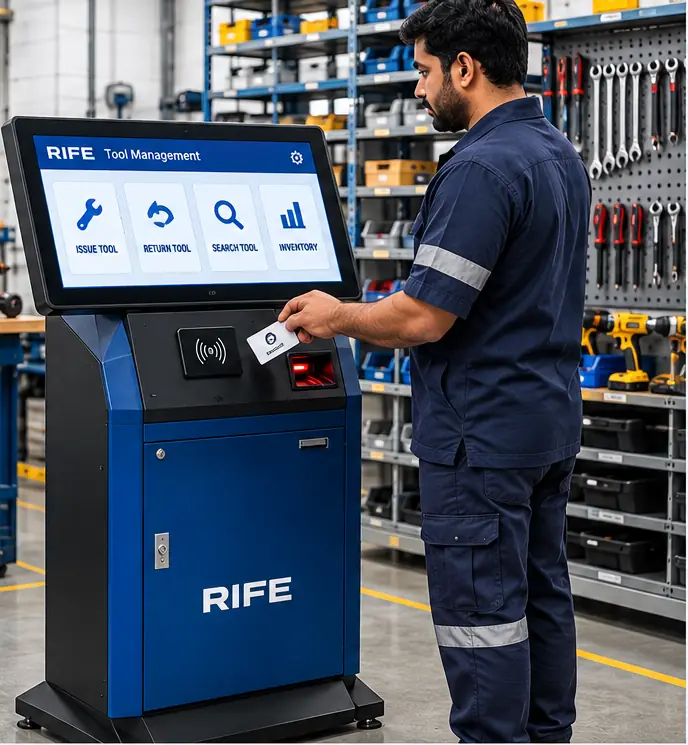
Illustrative
Put common tooling where the operator needs it. User-linked issue and return records help make daily tool availability, overdue returns and replenishment easier to manage.
Choose a complete system or combine suitable components around your existing tool store.
Dedicated measuring positions calculate the quantity of known consumables such as cutting inserts and drill bits.
Explore solution →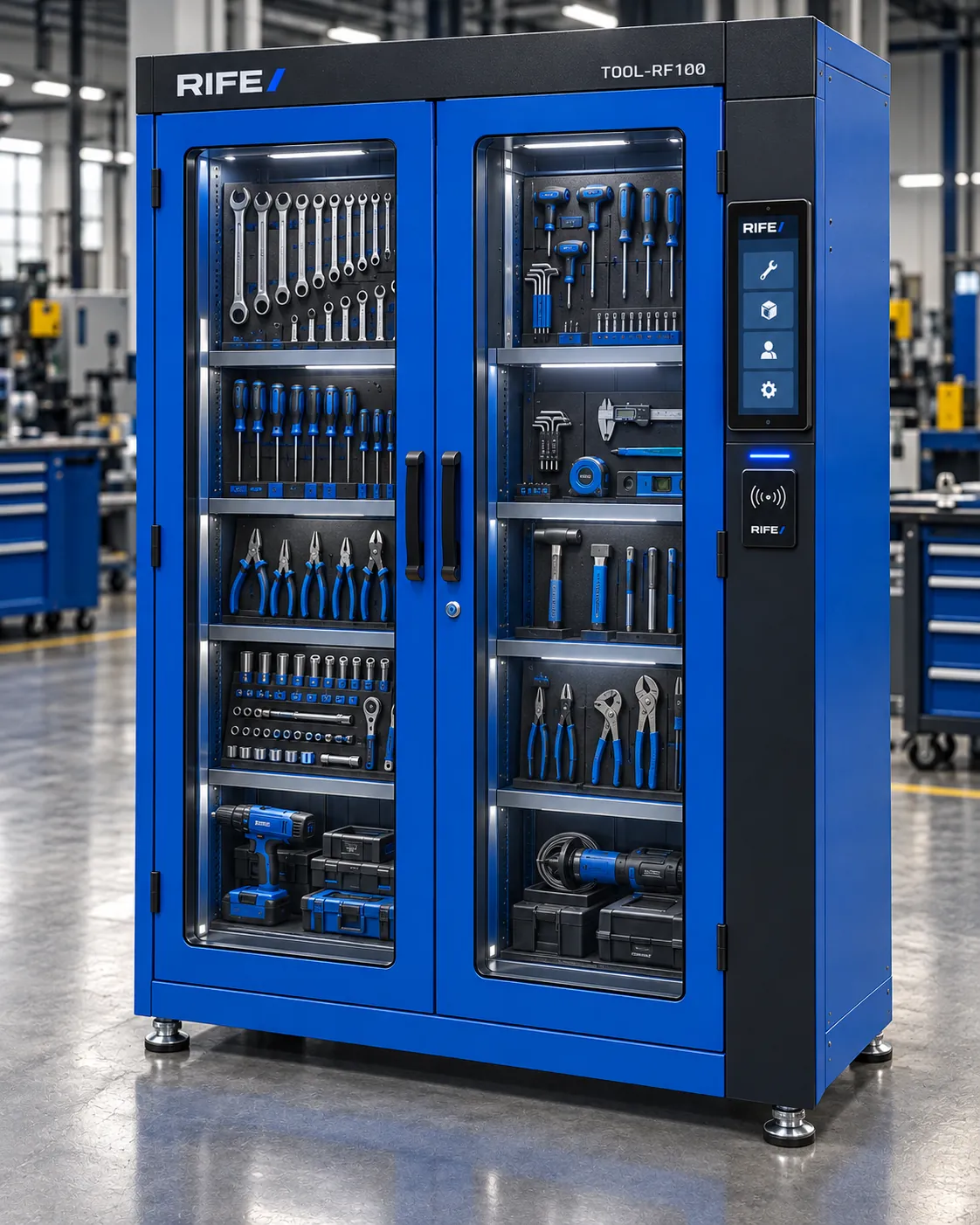
Access and identification options for returnable tools, with accountable issue and return workflows.
Explore solution →An operator authenticates, selects an item and records the transaction through a configured interface.
Stock views, transaction history, outstanding tools and replenishment records in one workflow.
Explore solution →Weighing drawers count the stock of consumable inserts, bits and fasteners. Returnable tools follow an issue-and-return process in which the user and item are recorded. A combined configuration helps the stores team see both replenishment needs and tools awaiting return.
Set up authorized users, tools, departments and reporting fields around the factory workflow. Session records help identify which materials were withdrawn; configured reports support analysis by job, machine or shift when those identifiers are included in the system.
List the commonly issued consumables and returnable tools; understand current logging and stockouts.
Select monitored drawers, RFID cabinets, kiosk placement and access rules.
Configure storage locations, tools, permissions and unit weights; check workflows with real users.
Operators begin self-service transactions and managers monitor usage, returns and stock thresholds.
Keep cutting inserts, end mills and consumables close to CNC machines.
Provide common tooling across busy shifts and production cells.
Support accountable issue and return of suitable maintenance tooling.
Make frequently used tools available without a staffed counter.
Start with item types, issue frequency, shift coverage and the level of user accountability required.
Request a Configuration →| Option | Configuration |
|---|---|
| Weighing drawers | Number, compartment sizes and sensor ranges |
| Cabinets | Controlled-access or RFID item-storage formats |
| Kiosk | Touchscreen, reader and kiosk position as specified |
| User identification | RFID card, PIN or chosen compatible method |
| Returnable-tool tracking | Issue, return and overdue rules as configured |
| Reporting | Stock, user, job and shift fields as required |
| Integration | Approved ERP, work order or export scope |
A smart tool crib combines secure storage, item identification or weighing, user authentication and inventory software to support self-service issue, return and replenishment.
A tool crib is the complete tool-control workflow and may include multiple cabinets, drawers and a kiosk. A vending or dispensing cabinet is one possible controlled-issue device within that workflow.
Existing cabinets can be assessed for lock retrofits, sensors or item identification. The right approach depends on their construction, drawer layout and space for electronics.
A configured self-service kiosk and authorized-access equipment can support unattended issue and return. Site procedures for exceptions, service, security and emergency access remain important.
Yes, with separate item workflows: calibrated weighing for suitable consumables and controlled check-out and returns for identified reusable tools.
Share your stored materials, capacities, storage dimensions and operational needs for a project-specific discussion.