On a large campus, a maintenance job often starts with a drive. The technician leaves the job, goes to the central store for a fuse or a filter, and comes back. Facilities managers call this "windshield time": hours lost every week to travelling instead of repairing.
Where the time goes
- Trips between buildings and a single central store.
- Waiting for a storekeeper, or finding the store closed at night.
- Searching through shelves of unrelated supplies.
- Ordering by guesswork because consumption isn't recorded.
The point-of-use model
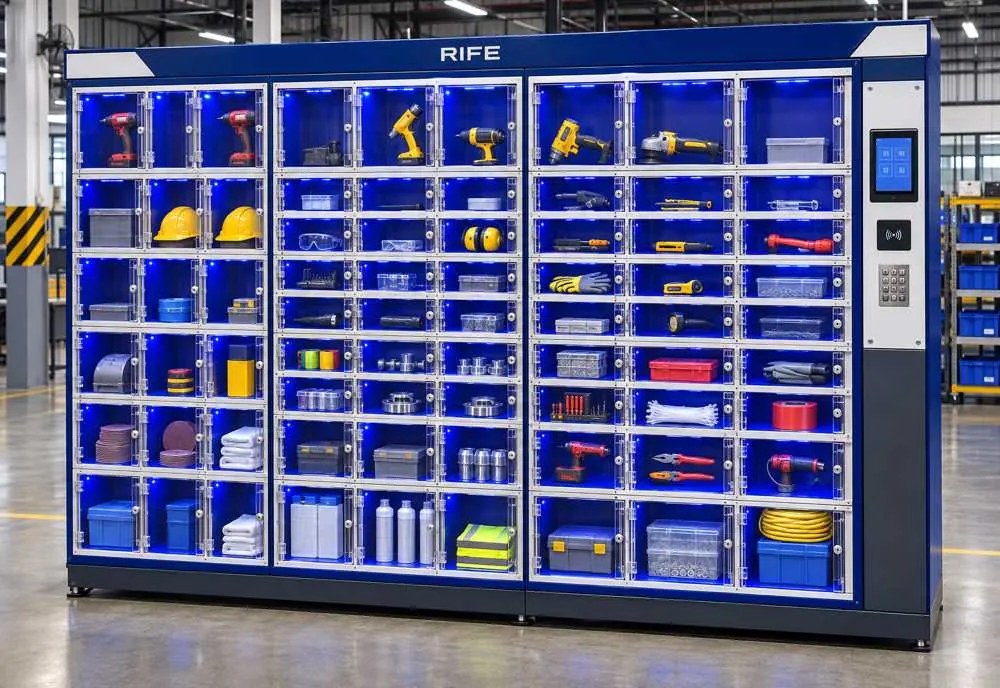
Instead of one central store, smart dispensing cabinets are placed in the buildings or zones where work happens. Each cabinet holds the consumables a team needs most, and each issue is recorded against the user.
Large campuses already use this approach, placing self-service supply points across campus zones so janitorial and maintenance staff get supplies close to where they work.
Four ways it helps facilities teams
- Less travel. Parts and supplies are in the building, not across campus.
- Round-the-clock access. Night, weekend and emergency crews sign in with an RFID card or PIN and help themselves.
- Trade-specific stock. Separate cabinets for janitorial, electrical, HVAC/plumbing or locksmith teams keep the right items together.
- Automatic restocking. Minimum and maximum levels per cabinet trigger refills, by your stores team or by a supplier.
Planning a rollout
See Campus & Facilities Maintenance and Smart Dispensing Cabinets.
- Map your buildings and the jobs that cause the most trips to stores.
- List the top 30–50 consumables per trade.
- Start with 3–5 cabinets in your busiest buildings.
- Review usage after a month, then extend.