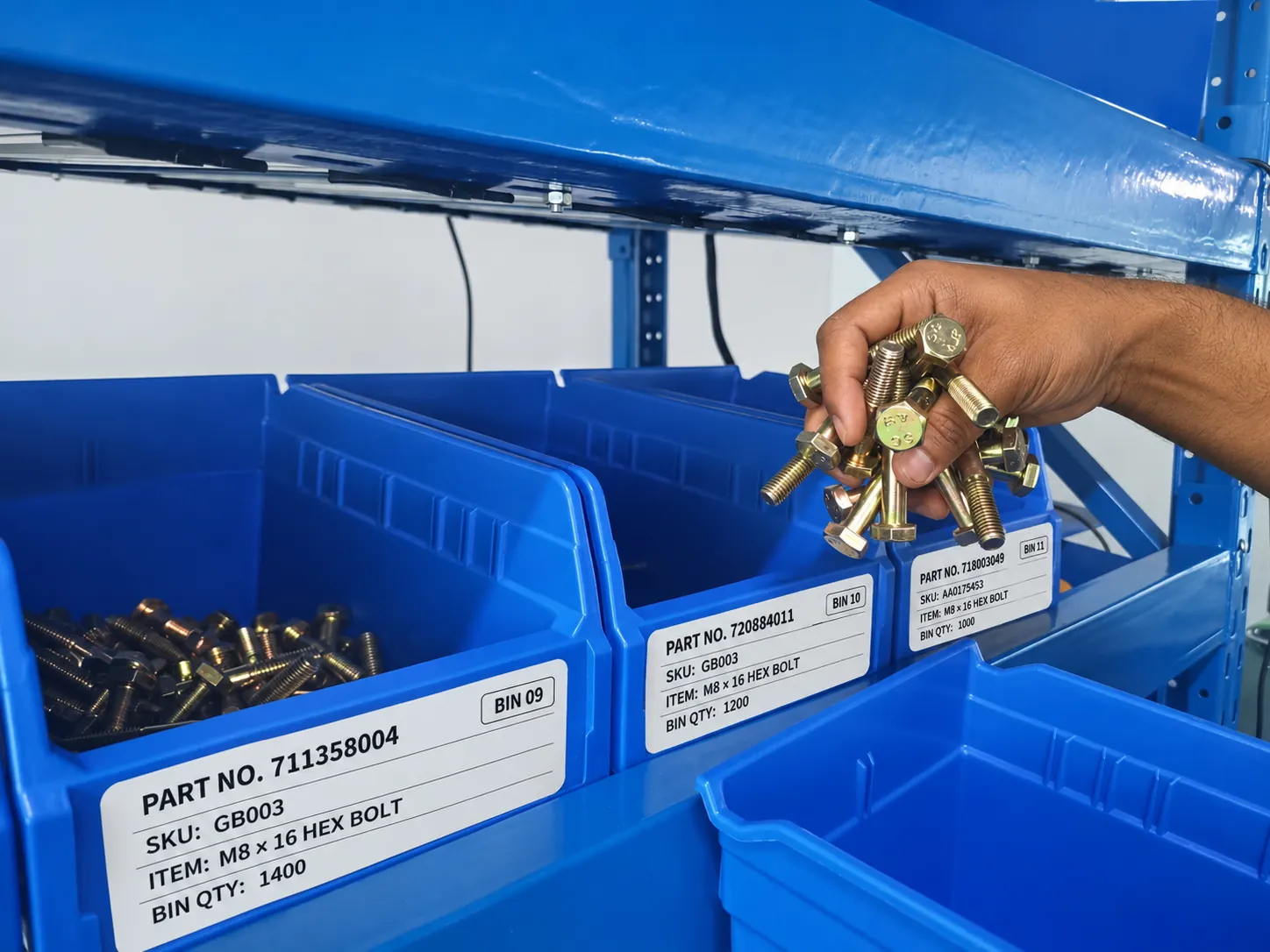
Compare traditional two-bin Kanban with smart weighing bins, from refill signals and lead times to stock visibility, reliability and costs.
Two approaches to the same replenishment problem
A conventional two-bin Kanban system uses a simple visual rule: when the first bin empties, its card or container signals that a refill is required while the second bin covers current demand. The method can be effective because it is understandable, inexpensive to explain and independent of complex electronics. Its accuracy relies on people noticing and completing the signal at the right time.
Weight-based bins use a different trigger. A load cell measures a dedicated storage position and software calculates stock quantity from calibrated net weight and item unit weight. The stock record can generate a digital replenishment alert when a configured threshold is reached, before the bin is completely empty. Neither approach removes the need to define who performs the refill and how much stock is required.
How a manual Kanban bin works day to day
In a typical two-bin process, operators take parts from the active bin. When it becomes empty, they move or expose its card or hand over the container. Stores personnel then refill it while operators use the reserve bin. The system is most dependable when bin labels, card positions, material rounds and refill responsibilities are clear. Workers can understand its logic without a dashboard.
Missed cards, late handoffs and misplaced bins are common operational risks, especially under shift pressure. The signal also says that a container reached its defined point; it does not necessarily provide a continuously updated count of what remains. For some plants this is entirely adequate. It can be an excellent starting point even when stock is eventually monitored electronically.
How a weighing bin creates a digital signal
A smart weighing bin normally sits on a dedicated measuring module beneath a tray, shelf or compartment. The stored item is mapped to the position with a calibrated unit weight and container tare. As parts are removed, the system calculates a revised count. Once that count reaches the configured reorder level, the software can add the location to an alert or replenishment list.
The sensor does not know the SKU from its weight alone. It relies on correct item mapping and one known material per measuring zone. The electronic reading also requires appropriate loading, power, signal processing and calibration. The benefit is a timely stock signal without requiring an operator to move a card; the responsibility for keeping the physical position organized remains.
Difference in the information available
A physical card usually conveys a clear binary message: refill this container. A monitored weighing position may give the estimated or calculated count, the recent movement and the time at which it reached a threshold. Across multiple positions, a dashboard can group the locations needing attention by rack, production zone or supplier. This information can help material handlers prepare a more deliberate replenishment round.
More data is not automatically better. A factory that only needs an empty-bin trigger may see little value in a detailed dashboard. A factory with hundreds of parts, variable consumption and distant stores may benefit substantially from seeing which bins are approaching the reorder point. The decision should focus on the action that the information enables, not on the number of screen widgets.
What matters for fasteners and small components
Fasteners are promising for weighing bins because many are standardized pieces with reasonably consistent mass. A unit-weight calibration can convert a net stock weight into an item quantity. The sensor must still detect the smallest relevant withdrawal while supporting the full bin and container. Mixed fasteners, damaged packaging and containers with variable tare reduce reliability.
For electronics parts, component mass may be extremely small and a specific storage environment may require ESD-compatible containers or handling. Those needs should be specified and tested independently of the monitoring hardware. A manual two-bin process may be more robust for a SKU with highly variable physical characteristics, while a monitored bin may be appropriate for high-use standardized items with regular picks.
Reorder timing and lead-time decisions
Both approaches need sufficient buffer stock to cover the refill cycle. In a manual two-bin system the reserve bin is intended to protect the line while the empty one is refilled. In a weighing system the threshold can be set above zero, so a refill signal occurs when calculated stock reaches a chosen number of parts. The threshold is selected against consumption rate, material-handler route and supplier lead time.
A digital alert that is configured too late can still result in a stockout; conversely, an overly cautious threshold can create constant refill activity. Pilot data and stores feedback should guide the actual levels. The advantage of weighing is that the replenishment point and current count can be visible without the operator deliberately triggering the card. The project must verify the timeliness of the software alert.
People, discipline and accountability
Traditional Kanban depends on consistent behaviour: staff must put cards where stores workers see them and replenish the correct material. Weight monitoring reduces that specific manual signalling task but introduces other responsibilities, such as using the approved container, keeping one SKU per measuring position and reviewing measurement exceptions. Both methods require good bin labelling and clear ownership.
Neither an open shelf nor a basic physical Kanban card identifies the worker who removed parts. If controlled access and user-wise withdrawals are needed, a cabinet can combine RFID or PIN authentication with suitable weighing compartments. That is a separate operational choice, not an automatic consequence of upgrading a bin to a digital scale.
Hardware, maintenance and network considerations
Manual bins can run without electrical power. A monitored system needs load cells, electronics, wiring or another supported signal path, a software configuration and maintenance arrangements. The mechanical design should protect components from vibration, dirt, loading equipment and daily handling. Sensor access and recalibration should be considered during installation rather than after a fault occurs.
If the connected dashboard or network is unavailable, the operations team should know what fallback replenishment procedure applies. A hybrid approach can preserve visible labels, reserve bins and manual exception routines while adding stock monitoring. A plant should choose the level of automation that its staff can maintain and that the operational problem justifies.
When the two-bin system may be the better choice
A physically simple location with stable consumption, a reliable stores route and low stockout risk may not require electronic monitoring. A visual Kanban signal can be cost-effective and easy to audit. Items with irregular unit weights or mixed materials may also be poor candidates for automatic weight counting. A small installation can benefit from starting with clearly labelled bins and a dependable refill procedure.
Choosing manual Kanban is not a failure to modernize. A good automation project makes explicit which problems cannot be solved economically by better operational discipline alone. The evidence may favour physical cards for some SKUs and a sensor-equipped solution for others. The resulting material-handling system can use both methods in different parts of the facility.
When monitored bins are worth evaluating
Digital weighing bins deserve evaluation where stockouts occur despite established Kanban rules, bins are difficult to inspect frequently, consumption changes unexpectedly or the stores team needs a consolidated view across many cells. They may also help supplier-managed stock programs where approved partners require timely inventory status to plan replenishment visits.
Select a pilot with items that have consistent unit weights, repeat picks and clear reorder levels. Record the baseline number of manual checks, late replenishments and shortage events. Then track whether the digital alert improves response without creating unmanageable exceptions. A credible comparison needs real operators and representative shifts, not just a one-time sensor demonstration.
How to compare both approaches in a pilot
Run the same item family under clear replenishment rules. For physical Kanban, record when an empty bin generates a card signal and when the refill is completed. For monitored bins, record calculated counts, the alert threshold and actual response time. Compare physical quantity at checkpoints so the electronic measurements are not judged only by their own dashboard.
Assess practical factors as well as timings: installation disruption, operator convenience, cost of maintenance, item mapping changes, training and the quality of the replenishment decision. Include normal errors such as a wrongly placed bin or changed packaging. That produces a more useful purchasing decision than marketing claims about universal accuracy or total elimination of manual stock checks.
Combining manual and electronic Kanban
A sensible final design can keep the reserve-bin principle while letting smart shelves provide a digital signal. The physical second bin protects the workstation during the refill cycle; the weighing module adds visibility into how fast stock is being used. The stores team may retain its familiar routes while receiving a consolidated low-stock list.
With clear roles, data quality and maintenance procedures, the result is not a replacement of a proven lean method but an upgrade to its signalling and monitoring. The right configuration may start with only high-risk lines or valuable consumables. Materials without a reliable weight signal can continue using physical cards, barcodes or other established inventory processes.
Key considerations
- Physical two-bin Kanban is a useful, simple replenishment process where staff handoffs are reliable.
- Smart weighing bins calculate current stock and generate configurable threshold signals.
- One known SKU, calibrated tare and appropriate sensing are necessary for useful electronic counts.
- A hybrid approach can retain the reserve-bin method while adding digital replenishment visibility.