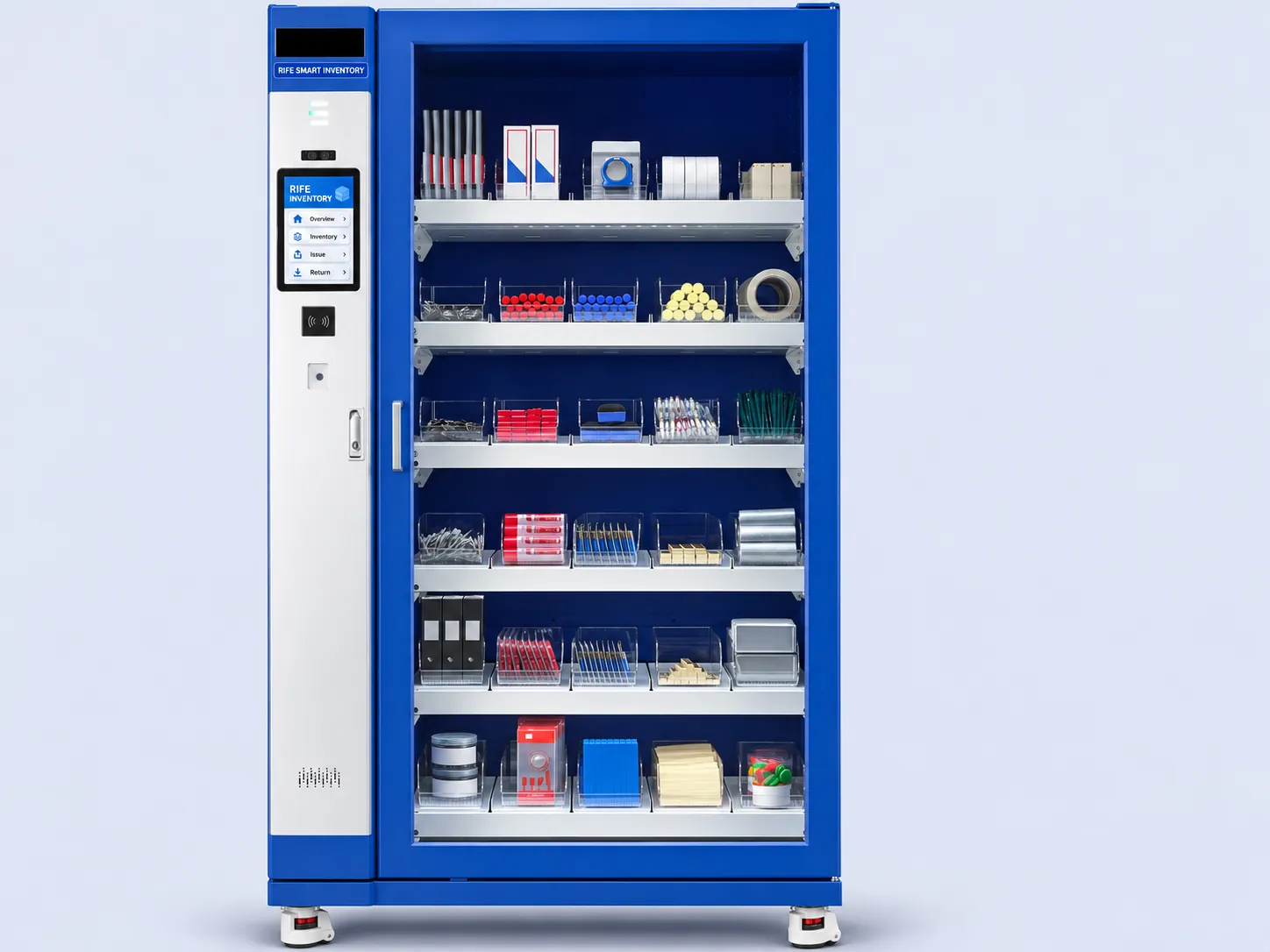
Nurses shouldn’t have to search for dressings or gloves. Yet in many hospitals, consumables are checked by eye, ordered in bulk “just in case”, and borrowed between wards when they run out.
The everyday problems
- Ward store rooms checked informally.
- Late or bulk orders.
- Items borrowed between wards and never recorded.
- No clear view of consumption by department.
How weight-based monitoring helps
Smart shelves and cabinets measure the weight of stock at each position. With the pack or unit weight set for each item, the system calculates quantities and raises alerts at reorder levels.
- Ward store rooms: smart shelves for high-use consumables.
- Controlled items: cabinets with RFID or PIN access record quantity per user.
- PPE points: smart dispensing cabinets control issue.
What changes
- Clinical staff spend less time checking and searching.
- Supply teams refill by actual use.
- High-value items are issued against a named user.
- Managers see consumption by ward.
A note on scope
Weight-based systems track the quantity of consumables and supplies. Medicines management has its own requirements and should be reviewed separately with your pharmacy team.