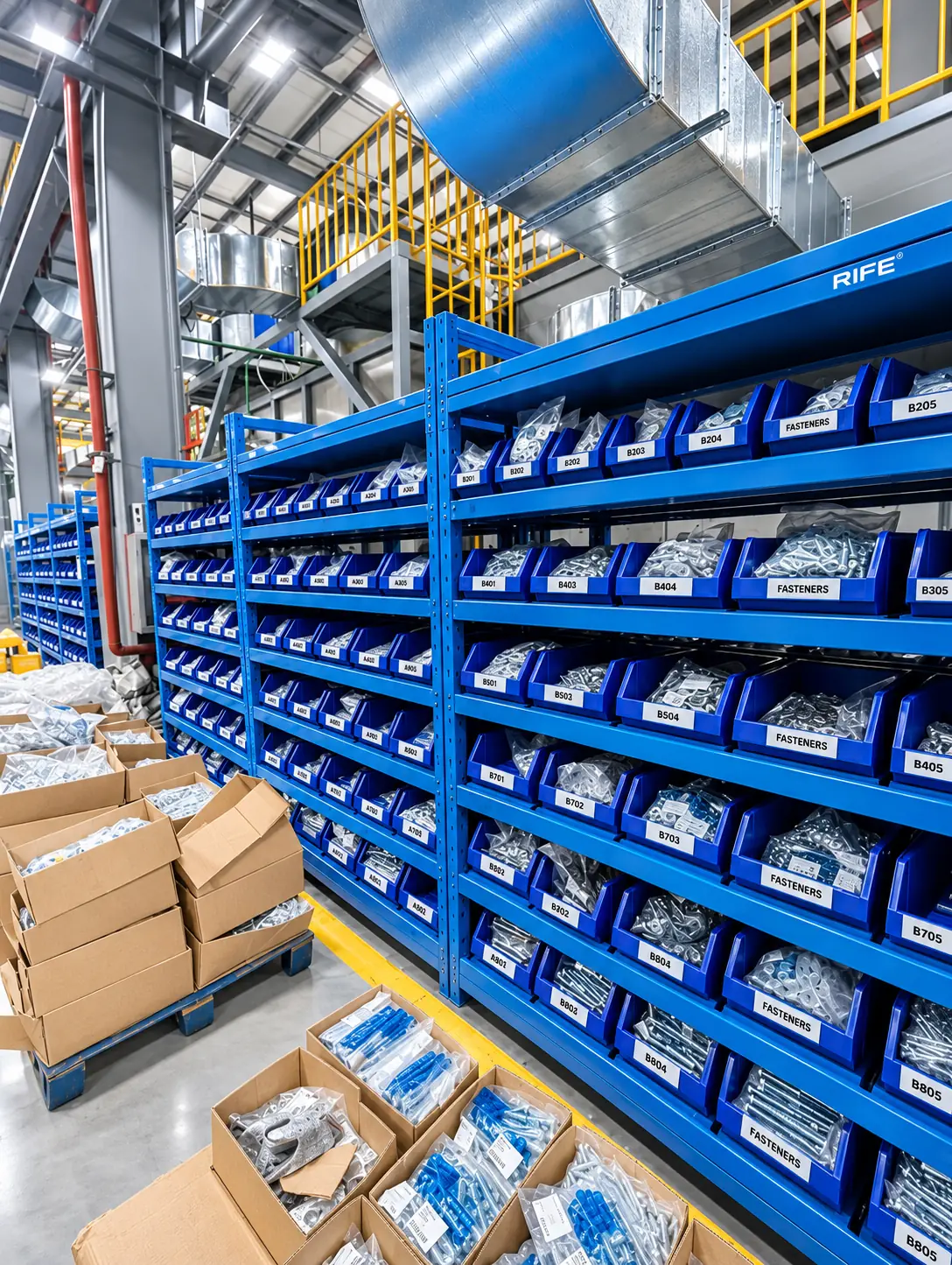
Cycle counting is the standard alternative to a full annual stocktake. Instead of closing the warehouse once a year, teams count a small slice of locations every day or week, so every item is counted several times a year. It’s a big improvement on the annual count, but it still has a basic limit: a count is only true at the moment it’s taken.
This guide explains how cycle counting works, where it falls short, and how automated inventory monitoring with smart shelves and weighing bins removes most routine counting.
How cycle counting works
A typical cycle-counting programme has three parts:
- Classify items. Many teams use ABC analysis. “A” items, which carry high value or high usage, are counted most often; “C” items least often.
- Schedule counts. Each day, a counter receives a list of locations to count.
- Reconcile. Differences between the physical count and the system record are investigated and adjusted.
Done well, cycle counting keeps accuracy higher than an annual stocktake and spreads the effort through the year.
Where cycle counting falls short
- Records drift between counts. An “A” item counted monthly can be wrong for most of that month.
- Counting takes skilled time. The people who count are often the same people who pick, issue and receive.
- Small parts are hard to count. Counting fasteners, washers or electronic components by hand is slow and error-prone, so teams estimate.
- Unrecorded withdrawals continue. Items taken during a breakdown or a night shift are only discovered at the next count.
- Discrepancies are found late. By the time a count reveals a gap, the shortage may already have stopped a job.
What automated inventory monitoring does differently
Automated inventory monitoring measures stock continuously instead of periodically. With weight-based systems, a load cell under each bin, shelf or drawer position measures total weight. The system divides the weight by the item’s unit weight to calculate quantity, and updates the record every time stock is taken or added.
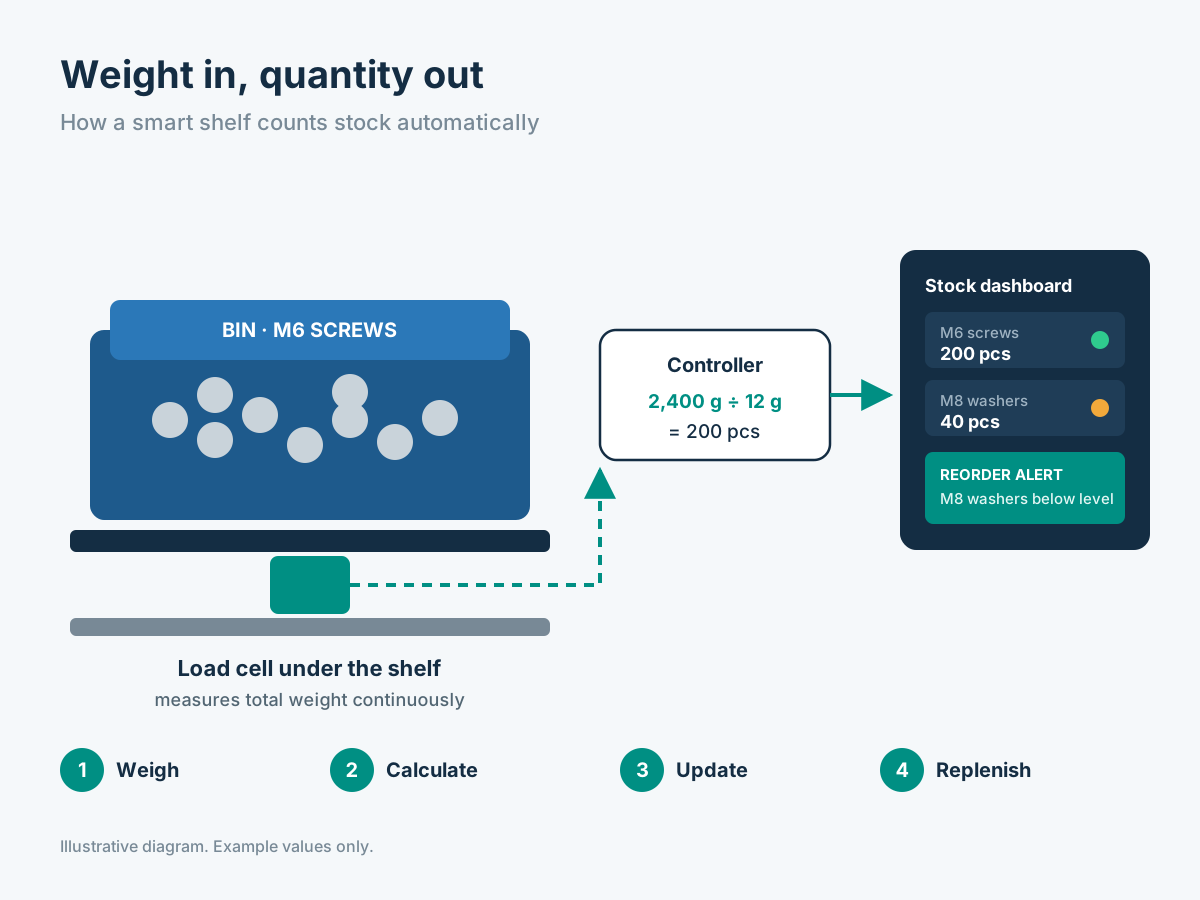
Illustrative technical diagram In practice, this means:
- Every location is “counted” all the time. There’s no gap between counts.
- Withdrawals are recorded when they happen, including out of hours.
- Discrepancies are flagged immediately, not weeks later.
- Reorder alerts follow real consumption.
Cycle counting vs automated monitoring at a glance
| Cycle counting | Automated monitoring | |
|---|---|---|
| How often stock is checked | On a schedule | Continuously |
| Labour | Counters on every count | Exceptions only |
| Small parts | Slow, often estimated | Counted by weight |
| Out-of-hours withdrawals | Found at next count | Recorded at once |
| Replenishment trigger | Report or visual check | Automatic reorder level |
Do you still need to count at all?
Yes, occasionally. Automated monitoring removes routine counting for suitable items, but periodic verification is still sensible for exceptions: damaged packaging, mixed items in one location, or items whose unit weight varies. The difference is that your team checks the exceptions the system flags, instead of counting everything on a schedule.
Where to start
Most teams begin with the locations where counting hurts most:
- High-usage small parts (fasteners, consumables) that are slow to count.
- Items whose shortage stops production.
- Stores that are accessed out of hours.
A pilot on one bench, cell or stores area shows the difference quickly. Products to look at: Smart Shelf & Weighing Bins, Smart Shelves & Weighing Racks and Inventory Monitoring Software.